As intelligent factories and warehouses to become a manufacturer's standard, the implementation of these systems to shift from a competitive advantage for the necessary condition to stay in the game. Failure to adopt intelligent technology will make the company easy due to staff shortages, accidents, or simple low efficiency caused by the production delays, at the same time its competitors is becoming shorter and faster.

As smart factories and warehouses become the norm for manufacturers, the implementation of these systems shifts from a competitive advantage to a necessity to stay in the game. Failure to adopt smart technology leaves companies vulnerable to production delays due to staff shortages, accidents or simple inefficiencies, while its competitors are becoming leaner and faster.
Automated warehouse systems combine multiple technologies, processes and data flows to form a flexible manufacturing facility that can adapt to changing conditions. Humans and machines work together with maximum efficiency and output, with minimal wasted time and effort.
According to a recent State of Smart Manufacturing survey of 300 manufacturers, nearly half of respondents said that at least part of their factories are connected to external data sources via the Internet. 61% of respondents said they intend to introduce smart manufacturing processes within the next 12 months.
Some companies, such as Creative Foam in Michigan, USA, have taken the idea of a highly flexible, fully connected factory to the extreme. Creative Foam's seven factories typically produce foam and adhesives for the automotive industry. However, early in the COVID-19 pandemic, the company converted one of its factories from where it typically makes foam and adhesives for the automotive industry to foam inserts for ventilators. This rapid transition is possible because Creative Foam's facilities operate through a state-of-the-art cloud-based Manufacturing Execution System (MES).
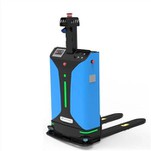
Autonomous mobile robots are a key component of smart factories and warehouses. AMRs free workers from repetitive tasks such as moving materials, taking stock and carrying heavy loads. However, AMRs are more than workhorses when used in modern smart factories or warehouses. They become fully integrated teams member. These robots interact not only with each other and with human workers, but with the facility itself.
The connected AMR responds immediately

The AMR is connected to the MES of the smart factory and can receive and execute real-time instructions. This immediacy facilitates the use of AMRs to deliver parts just in time. Robots can be dispatched to retrieve assembly materials when needed. Rather than maintaining a large number of parts on site, store them in a nearby warehouse and deliver them to production at the right time.
Connected AMRs and Human Collaboration
Spanish automaker Seat, a subsidiary of Volkswagen, uses autonomous mobile robots at its plant in Martorell, Spain. Seat uses heavy-duty robots to deliver parts to the assembly line. The robots can safely navigate the entire facility and can carry up to 225 kilograms, or more than 500 kilograms. Relying on AMRs to transport these large loads reduces the risk of personal accident and injury.
Other robots at the Martorell plant work in collaboration with human workers. Known as cobots, these smaller AMRs perform repetitive tasks in the assembly area, such as applying decals to cars as they roll off the assembly line, and scan parts as they are used to maintain a second-accurate inventory count.