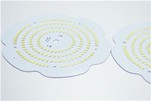
What is SMT :

SMT is Surface Mounted Technology (abbreviation of Surface Mounted Technology), which is the most popular technology and process in the electronic assembly industry.
What are the characteristics of SMT:
1. High assembly density, small size and light weight of electronic products. The volume and weight of SMD components are only about 1/10 of those of traditional plug-in components. Generally, after using SMT, the volume of electronic products is reduced by 40%~60% and the weight is reduced by 60%. %~80%.
2. High reliability and strong anti-vibration ability. Solder joint defect rate is low.
3. Good high frequency characteristics. Electromagnetic and radio frequency interference is reduced.
4. It is easy to realize automation and improve production efficiency. Reduce costs by 30% to 50%. Save material, energy, equipment, manpower, time, etc.

Why use SMT :
1. Electronic products pursue miniaturization, and the previously used perforated plug-in components cannot be reduced.
2. The functions of electronic products are more complete, and the integrated circuits (ICs) used have no perforated components, especially large-scale and highly integrated ICs, which have to use surface mount components.
3. The products are batched and the production is automated. The factory must produce high-quality products at low cost and high output to meet customer needs and strengthen market competitiveness.
4. Development of electronic components, development of integrated circuits (IC), and multiple applications of semiconductor materials
5. The electronic technology revolution is imperative, chasing the international trend

SMT basic process components:
Screen printing (or dispensing) --> Mounting --> (curing) --> Reflow soldering --> Cleaning --> Inspection --> Repair
Silkscreen: Its function is to leak solder paste or patch glue to the pads of the PCB, and prepare for the welding of components. The equipment used is a screen printing machine (screen printing machine), which is located at the forefront of the SMT production line.
Dispensing: it drips glue onto the fixed position of the PCB, and its main function is to fix the components to the PCB. The equipment used is a glue dispenser, which is located at the front end of the SMT production line or behind the testing equipment.
Mounting: Its role is to accurately mount surface mount components to the fixed position of the PCB. The equipment used is a placement machine, which is located behind the screen printing machine in the SMT production line.
Curing: Its function is to melt the patch glue, so that the surface mount components and the PCB board are firmly bonded together. The equipment used is a curing oven, which is located behind the placement machine in the SMT production line.
Reflow soldering: Its function is to melt the solder paste, so that the surface mount components and the PCB board are firmly bonded together. The equipment used is a reflow oven, located behind the placement machine in the SMT production line.
Cleaning: Its function is to remove the welding residues such as flux that are harmful to the human body on the assembled PCB board. The equipment used is a cleaning machine, and the location may not be fixed, and it may be online or offline.
Inspection: Its function is to inspect the welding quality and assembly quality of the assembled PCB board. The equipment used includes magnifying glass, microscope, in-circuit tester (ICT), flying probe tester, automatic optical inspection (AOI), X-RAY inspection system, functional tester, etc. The location can be configured in a suitable place on the production line according to the needs of the inspection.
Repair: Its function is to return the PCB board that has been detected to be faulty. The tools used are soldering iron, rework station, etc. Configurable anywhere in the production line
set.