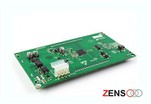
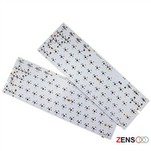
Everyone knows that precision PCB circuit boards are easy to bend or warp when passing through a reflow oven. So how to avoid this situation, here are some suggestions that I hope will help.
1. Reduce the influence of temperature on the gravity of the circuit board
Since "temperature" is the main source of attraction in the board, as long as the temperature of the reflow oven is reduced or the rate of temperature rise and fall in the reflow oven is slowed, board bending and board warping can be prevented. decrease very much. However, other side effects may occur, such as solder shorts.
2. Use high Tg board
Tg is the glass transition temperature, that is, the temperature at which the material changes from the glassy state to the rubbery state. The lower the Tg value, the faster the board will start to soften after entering the reflow oven, and the longer it will take to turn into a soft gel. The deformation of precision PCB circuit boards will of course be more serious. Using a higher Tg sheet can increase its ability to withstand stress and deformation, but the price of the material is relatively high.
3. Increase board thickness
In order to achieve the purpose of being lighter and thinner, many electronic products have a thickness of 1.0mm, 0.8mm, or even 0.6mm. Such a thickness is difficult to prevent the circuit board from deforming after passing through the reflow oven. Therefore, it is recommended that if there is no requirement for lightness and thinness, the board can be used with a thickness of 1.6mm, which can greatly reduce the risk of bending and deformation of the precision PCB circuit board.