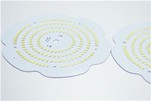
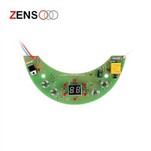
For those who are not familiar with PCB printed circuit boards and their manufacturing methods, there is a common misunderstanding that all PCB boards are green. However, it is not. PCB printed circuit boards have many colors, and there are reasons for these different colors. Let us learn more about the colors, variations and meaning of printed circuit boards.
Although green is still the most prominent color of PCB printed circuit boards, other colors used include blue, red, yellow, white, black, and purple. Each color has its function and aesthetic reasons, which we will discuss in depth later. Green is by far the most common, and there are several good reasons to use green frequently. Green has been around for a long time and has always been the general color code for PCB boards. Green is one of the least fatigue-free colors. Therefore, if the designer works on the green PCB for a long time, it is considered the least tiring color to the eyes. Green PCB printed circuit boards have higher contrast, making them suitable for quick identification of traces and residues. The resources that can be used to produce green printed circuit boards are widely available and easily available in large quantities. Since green is the color used by most people, it is conducive to mass production and reduces the price of product costs.