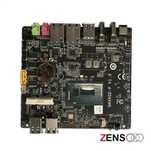
PCBA production process can be divided into several large processes:
SMT chip processing → DIP plug-in processing → PCBA testing → three-proof coating → finished product assembly.

SMT patch processing link
The process of SMT chip processing is: solder paste stirring→solder paste printing→SPI→mounting→reflow soldering→AOI→rework
1. Solder paste stirring
After taking the solder paste out of the refrigerator to thaw, use hand or machine to stir it to suit printing and soldering.
2. Solder paste printing
Place the solder paste on the stencil, and squeegee the solder paste onto the PCB pads.
3. SPI
SPI is a solder paste thickness detector, which can detect the solder paste printing and control the solder paste printing effect.
4. Mounting
5. Reflow soldering
The mounted PCB board is subjected to reflow soldering, and through the high temperature inside, the paste-like solder paste is heated into a liquid, and finally cooled and solidified to complete the welding.
6. AOI
AOI is automatic optical inspection, which can detect the welding effect of the PCB board by scanning, and can detect the defect of the board.
7. Repair
Repair the defects detected by AOI or manually.

DIP plug-in processing link
The process of DIP plug-in processing is: plug-in → wave soldering → foot cutting → post-soldering processing → board washing → quality inspection
1. Plugin
Process the pins of the plug-in material and insert it on the PCB board
2. Wave soldering
The inserted board is wave-soldered. During this process, liquid tin will be sprayed onto the PCB board, and finally the soldering will be completed after cooling.
3. Cut feet
The pins of the soldered board are too long and need to be cut.
4. Post welding processing
Hand solder the components with a soldering iron.
5. Wash the board
After wave soldering, the board will be relatively dirty, and it needs to be cleaned with board washing water and board washing tank, or by machine.
6. Quality inspection
Check the PCB board, unqualified products need to be repaired, and qualified products can enter the next process.
PCBA test
PCBA test can be divided into ICT test, FCT test, aging test, vibration test, etc.
PCBA test is a big test. According to different products and different customer requirements, the test methods used are different. The ICT test is to test the welding of components and the on-off of the circuit, while the FCT test is to test the input and output parameters of the PCBA board to see if they meet the requirements.
PCBA three-proof coating
The PCBA three-proof coating process steps are: painting surface A → surface drying → painting surface B → curing at room temperature 5. Spray thickness: spray thickness: 0.1mm—0.3mm Under the conditions of relative humidity below 75%. There are still many PCBA three-proof coatings, especially in some environments with relatively harsh temperature and humidity. PCBA coated three-proof paint has superior insulation, moisture-proof, anti-leakage, shock-proof, dust-proof, anti-corrosion, anti-aging, anti-mildew , Prevent parts loosening and insulation and corona resistance, which can prolong the storage time of PCBA and isolate external erosion and pollution. The spray method is the most commonly used coating method in the industry.
Finished product assembly
Assemble the outer casing of the PCBA board that has been tested OK after coating, and then test it, and finally it can be shipped.
PCBA production is a chain, and any problems in the PCBA production process will have a great impact on the overall quality, and each process needs to be strictly controlled.