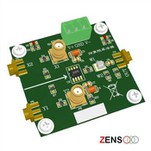
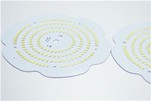
First, the definition of PCB PCB (Printed Circuit Board), Chinese is printed circuit board, or printed circuit board. It is an important component in electronic products, a support for components, and a carrier for the electrical connection of many electronic components. Like paper printing, PCB boards are also printed, but the technology used is called electronic printing, so we call them "printed" circuit boards.

2. The past and present of PCB Before the appearance of PCB, electronic components were directly connected by wires. For equipment with a large number of components, the wiring was often messy, and there were great security risks and errors. Until 1936, an Austrian named Paul Eisler made the first creative use of printed circuit boards in his radio. In 1943, Americans used PCBs for military radios; in 1948, the United States officially recognized the commercial use of this invention. By the 1950s, printed circuit boards had been widely used, and there was a PCB in almost every electronic device. Because of its important role in electronic products, people called it "the mother of electronic products". So far, everything from Bluetooth headsets, electronic watches, and calculators to computers, communications equipment, and military/aerospace systems. Wherever integrated circuits are needed, PCB-carrying electronic devices are inseparable. The PCB consists of three parts: an insulating base plate, a connecting wire, and a pad, which are three-in-one. The conductive circuit and the insulating base plate are combined into one to carry electronic devices. Its appearance abandons the traditional complex wiring, reduces the connection and welding workload between electronic devices; it also reduces the size of the whole machine, reduces the production cost, and improves the quality and reliability of the equipment. The earliest printed circuit boards for the repair of electronic components used paper-based copper-clad printed boards. In the 1950s, with the advent of semiconductor transistors and the rapid development of integrated circuits, the volume of electronic equipment became smaller and smaller, and the density and difficulty of circuit wiring became larger and larger. higher requirement. As a result, the variety of printed boards is derived from single-sided boards, double-sided boards, multi-layer boards and flexible boards, which adapt to the development and changes of the electronics industry; the quality and structure also reach the level of ultra-high density, miniaturization and high reliability; new Design methods, design supplies, as well as board-making materials and board-making processes are also emerging.

3. Advantages of PCB use Today, with the assistance of various computer design (CAD) printed circuit board application software, PCB design and production technology has been fully popularized; many printed circuit board manufacturers have already replaced mechanized and automated production. manual operation. The reason why PCB can be widely used lies in its subversive advantages. Here, Xiaoming proofing PCBA summarizes the seven advantages of PCB:

1. High reliability Through aging test, inspection test and other technical means, the PCB can work stably for a long time (usually 20 years).
2. High density Over the years, the high density of printed boards has been able to adapt to the improvement of integrated circuit integration and the advancement of installation technology.
3. Designability The design requirements for various properties of the PCB, such as electrical, physical, chemical, mechanical and other properties, can be achieved through standardized and standardized design, with controllable design time and high efficiency.
4. Modern management is adopted for producibility, and PCB production has entered the stage of standardization, scale (quantification) and automation, ensuring that product quality is generally reliable.
5. Assemblable Various components can be assembled on a standardized PCB, and can be automated and mass-produced on a large scale. In addition, the overall assembly of PCB and PCB can also form larger components, systems, and even the whole machine.
6. Testability With relatively complete test methods and standards, it can detect and identify the eligibility and service life of PCB products through various test equipment and instruments.
7. Maintainability Since the overall assembly of PCB products and various components is based on standardized design and large-scale production, these components are also standardized. If the system fails, it can be easily and flexibly replaced, and the whole machine can be quickly restored. PCB also has many advantages, such as miniaturization and lightening of the system, and high-speed signal transmission. Finally, what you need to know is that PCBs are classified according to the number of circuit layers and can be divided into single-sided, double-sided and multi-layered boards. Common multi-layer boards are 4-layer boards or 6-layer boards, and complex multi-layer boards can reach dozens of layers.